
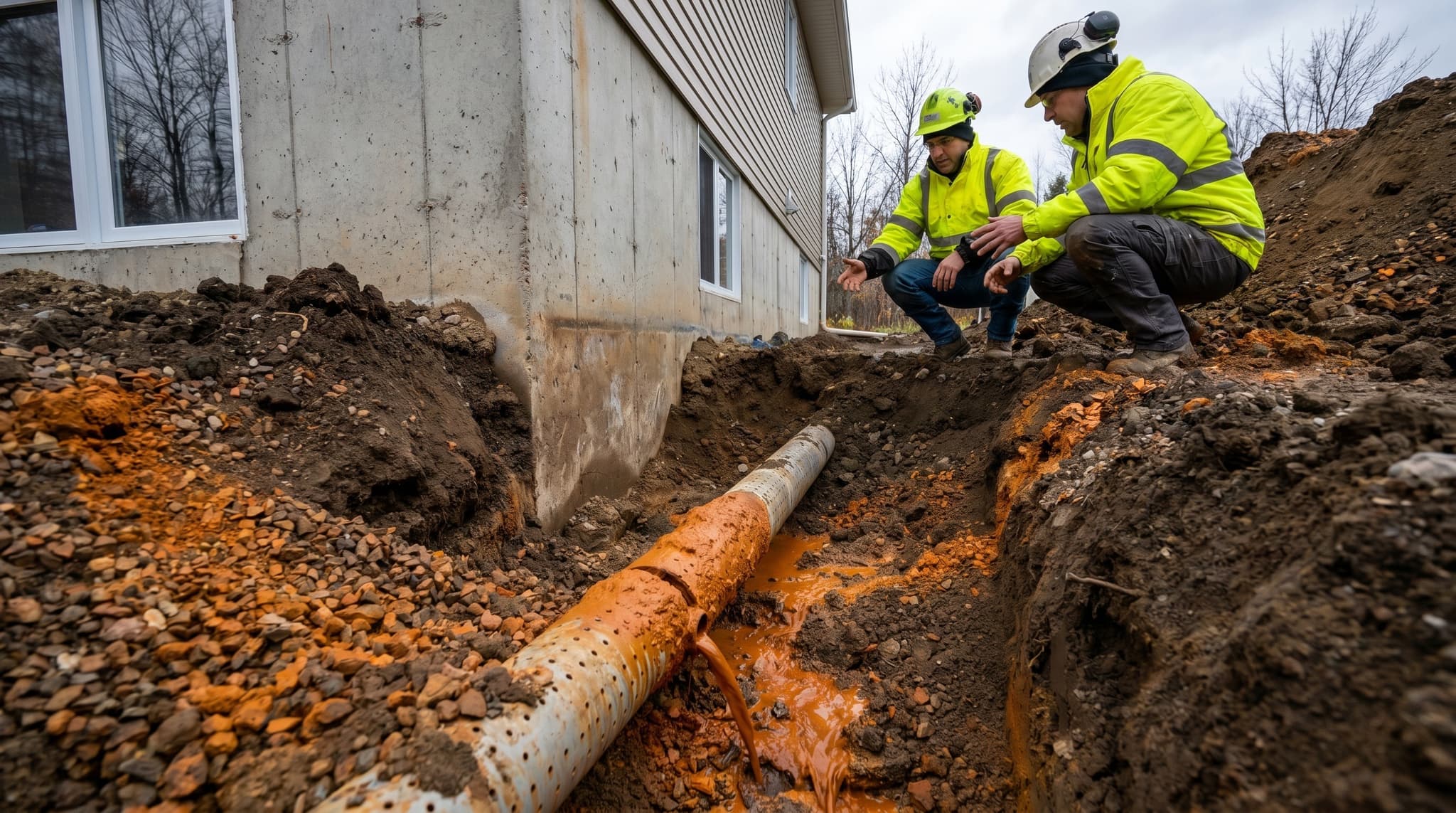
Iron ochre — diagnosis, treatment and prevention in Lanaudière
Iron ochre is one of the costliest problems that can affect a French drain — and one of the most misunderstood. This reddish sludge, the product of a biochemical reaction between water, iron and certain soil bacteria, gradually clogs your drain until water starts seeping into the basement. Imperméabilisation GSV has been diagnosing, treating and installing the right solutions across Lanaudière for over 30 years.
What is iron ochre?
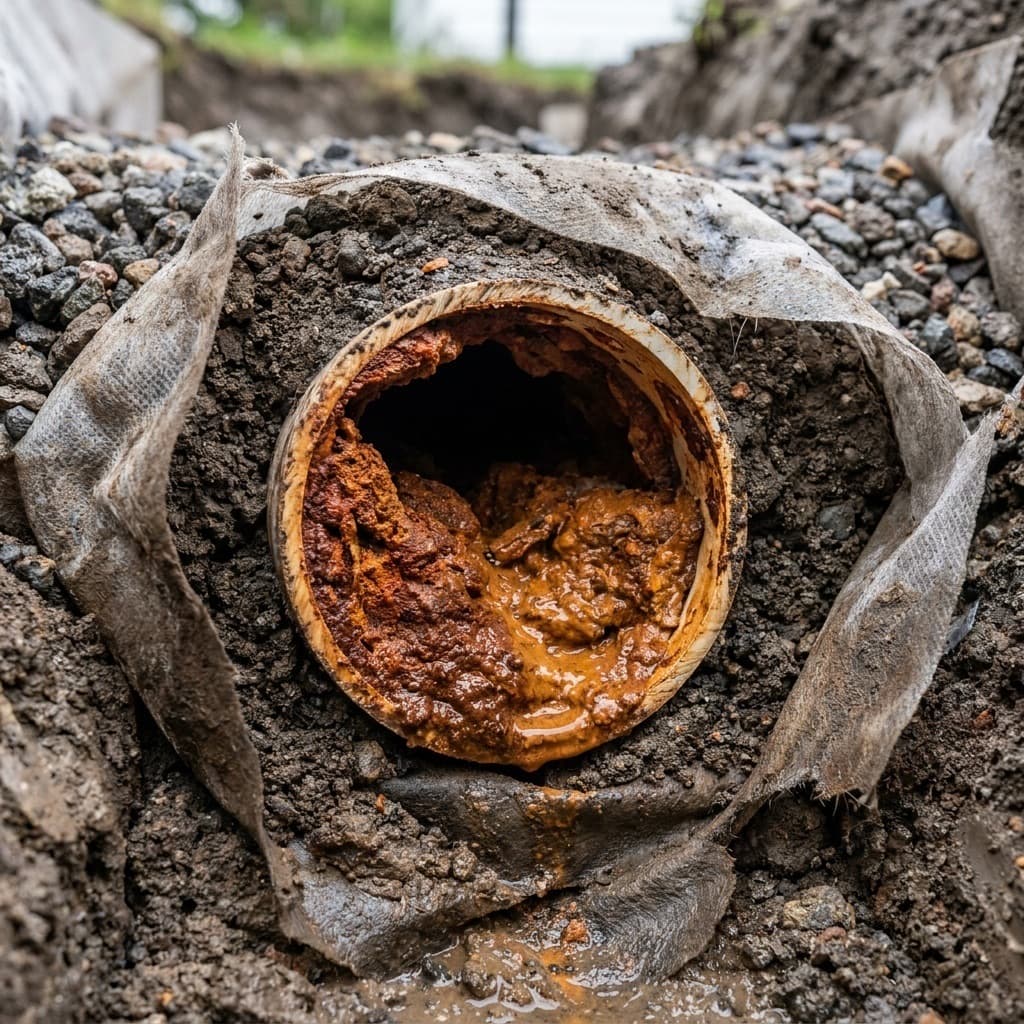
Iron ochre is not just rust that fell into your drain. It is the result of a biochemical reaction between three elements present in the soil around your foundation: iron dissolved in the groundwater, oxygen brought in by the French drain itself, and specific soil bacteria — mainly Gallionella and Leptothrix, sometimes grouped together as iron bacteria. These bacteria oxidize iron to feed on it, and the by-product of their metabolism is a reddish-orange gelatinous sludge that builds up on the drain walls, inside the inspection ports and around the sump pump.
The difference with ordinary rust matters. Rust is a dry, hard iron oxide that sticks to a metal object. Iron ochre is a living sludge: as long as the bacteria have access to dissolved iron and oxygen, the colony keeps renewing itself. A surface cleaning solves nothing medium-term, because the bacterial colony rebuilds itself as soon as you turn your back. That is what makes the problem particularly tricky for homeowners who do not measure the root cause.
Why does iron ochre affect some regions of Quebec more than others? The answer is in the soil. The St. Lawrence Lowlands — where most of Lanaudière sits, along with Laval, the Rive-Nord and several pockets of the Laurentides — rest on ancient marine deposits rich in dissolved ferrous iron. Joliette, Saint-Charles-Borromée, Notre-Dame-des-Prairies, Repentigny and several sectors of Mascouche and Terrebonne are regularly affected. Former farmland converted to housing, poorly drained clay soils and high water tables are all at-risk contexts. If your neighbour has already had iron ochre, there is a good chance your lot shares the same conditions.
How do I know if I have iron ochre?
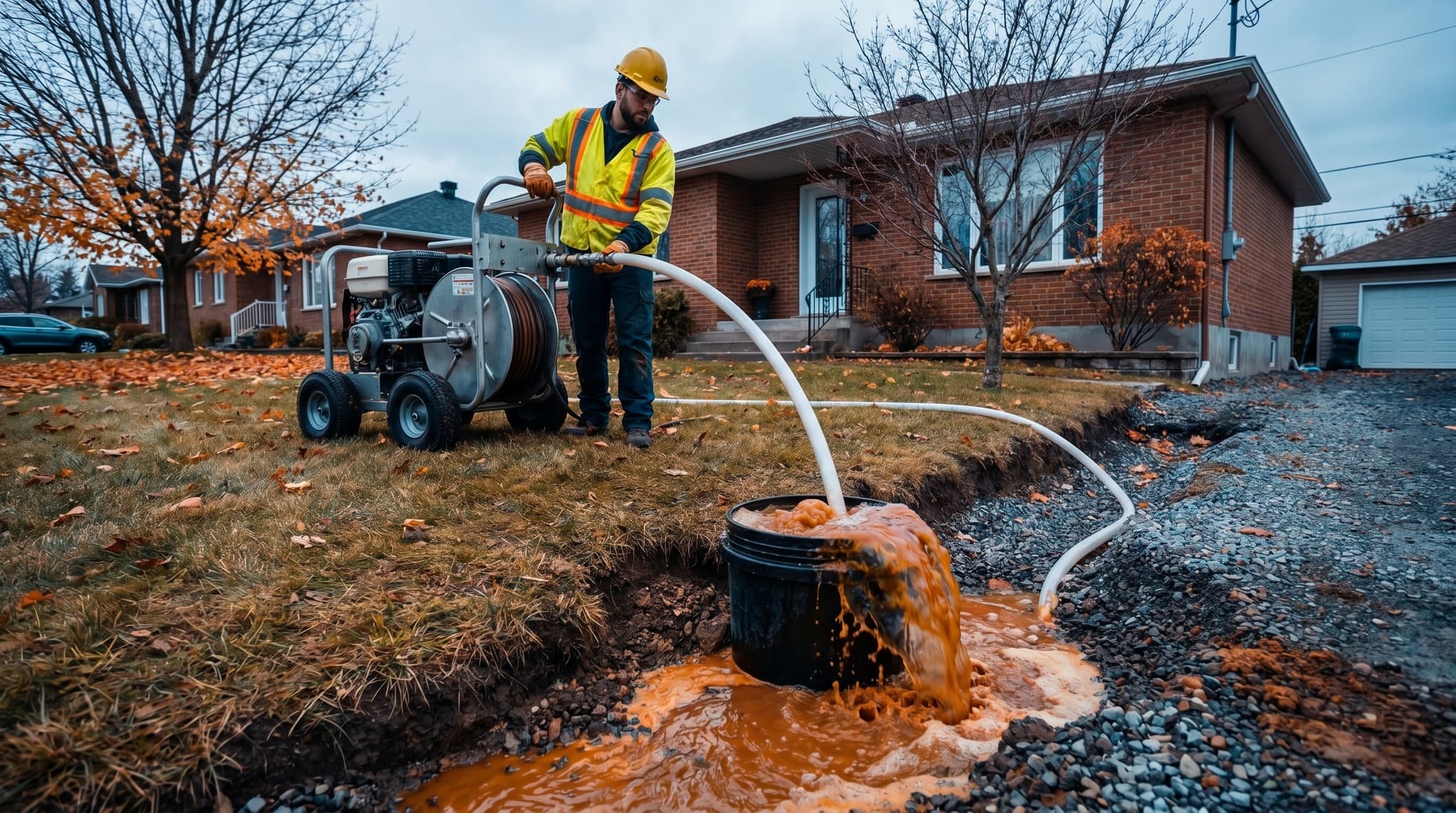
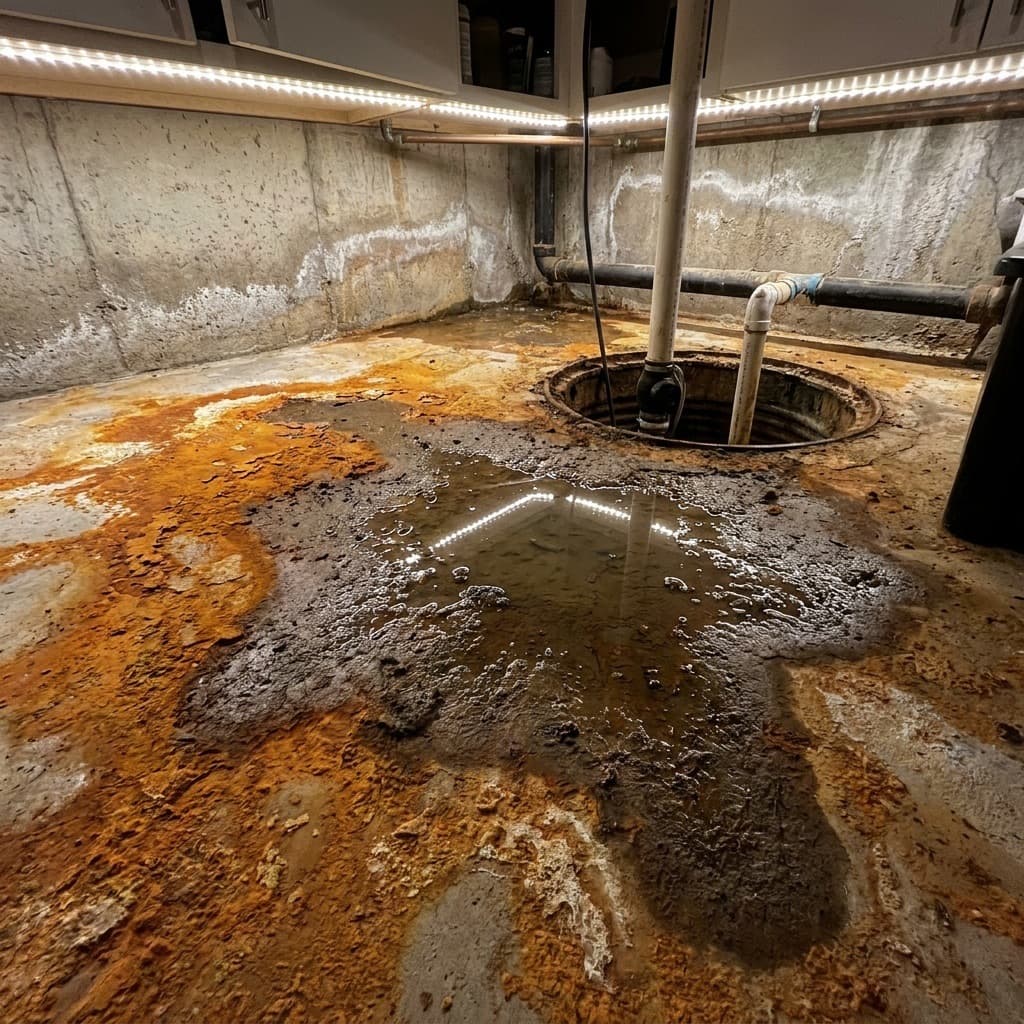
Six visible signs let a homeowner suspect iron ochre around the foundation. First, orange or rust-coloured water showing up in the basement, especially near the sump pit or along the slab-to-wall joint. Second, a red or ochre deposit on the lawn where the drain discharges the water it collects — a reddish weeping in the grass or around the storm drain outlet. Third, a sulphur smell, sometimes described as rotten eggs, coming from the basement or rising from the sump pit when the lid is lifted.
The next three signs are about how the system runs. Fourth, a noticeable slowdown in drain flow — the inspection port fills faster than before, water takes longer to drain, or the sump pump now runs continuously during rain. Fifth, reddish stains around the sump pump, on the basin walls or on the discharge line. Sixth, visible blockage inside the drain inspection port: a gelatinous deposit or sludge that clings to the walls and partly blocks the flow.
You can also run a simple test at home. Pump a glass of water directly from the sump or the drain inspection port, transfer it to a clear container and let it sit undisturbed for 24 hours. If a reddish deposit forms at the bottom and the water turns orange as it oxidizes, you likely have iron ochre. The test is only indicative: it confirms dissolved iron is present but does not measure how much has already accumulated in the drain.
When should you call in a professional? As soon as two or more of these signs appear together, or when a single sign is severe — a sump pump that runs nonstop even in dry weather, or recurring spring water infiltration, for instance. A drain camera inspection confirms the diagnosis in minutes and measures the scope of the problem before any work is planned.
Does iron ochre affect my home's value? (hidden defects)
Yes, iron ochre can directly affect your home's value and, in many cases, the sale transaction itself. In Quebec, a French drain clogged by iron ochre — especially if it is already causing basement water infiltration — can be qualified as a hidden defect (vice caché) if the buyer discovers the problem within three years of the sale and can demonstrate that the defect existed at the time of sale, that it was serious enough to reduce the use of the property, that it was not apparent on reasonable inspection, and that it was not disclosed by the seller.
Quebec case law of recent years has been consistent on this point. Courts have repeatedly granted price reductions, and sometimes complete rescission of the sale, in files where a French drain was heavily compromised by iron ochre without disclosure on the seller's declaration. Conversely, a seller who has documented the problem, attached a recent camera inspection and ticked the appropriate box on the declaration form considerably limits the legal risk while showing they are acting in good faith.
The practical advice is simple. If you suspect iron ochre and plan to sell within the next few years, have a camera inspection done by a certified contractor and keep the report on file. If there is a problem, treat it now: the cost of a proactive intervention is almost always lower than the discount a buyer will apply or the risk of a hidden-defect claim. If you are buying a home in Lanaudière or the Rive-Nord, especially in a sector known for ferrous soils, require a drain camera inspection in your conditional offer.
False solutions to avoid (common myths)
Three myths circulate about iron ochre and cost well-intentioned homeowners thousands of dollars every year. First myth, bleach gets rid of iron ochre. False. Bleach does kill the iron bacteria in direct contact with the product, but it does not break down the mineral deposits already formed, and it does nothing to change the underlying conditions — iron in the soil, oxygen in the drain — that bring the colony back within weeks. Pouring bleach into the sump pit feels like action but is, at best, a temporary surface cleaning that can also damage rubber components of the pump.
Second myth, a one-off cleaning is enough. Also false. Iron ochre rebuilds itself as long as the three conditions — oxygen, iron, bacteria — remain present. A proper high-pressure cleaning does clear the drain and restore years of good operation, but it has to be part of a periodic maintenance strategy. On high-risk lots, we recommend a cleaning every three to five years, paired with an annual camera inspection when possible. That is a modest investment compared to the cost of a fully clogged drain that needs to be replaced.
Third myth, every drain ends up clogging anyway, so why bother. False. On a lot with little iron content, or with a good initial install — quality perforated drain, proper geotextile, inspection ports added at construction — a French drain can last 25 years or more without major work. The deciding factor is not time, it is the combination of soil, install quality and preventive maintenance. We regularly see drains over 30 years old in perfect condition in Lanaudière, and others that are compromised after less than eight years for lack of inspection. Do not give up on the basis of this received idea.
Real solutions by severity
We sort interventions into four levels, depending on the state of the drain and the severity of the ochre deposit. Level one, prevention. For at-risk lots with a still-healthy drain, the approach starts at construction or during a renovation: inspection ports installed at each corner of the foundation so the drain can be camera-inspected quickly, a quality perforated drain wrapped in fine-mesh geotextile fabric, a clean and properly sized gravel bed, and an annual visual inspection of the port. That is the stage where you spend the least and gain the most service life. For existing homes without ports, adding them is a relatively simple job that unlocks everything else.
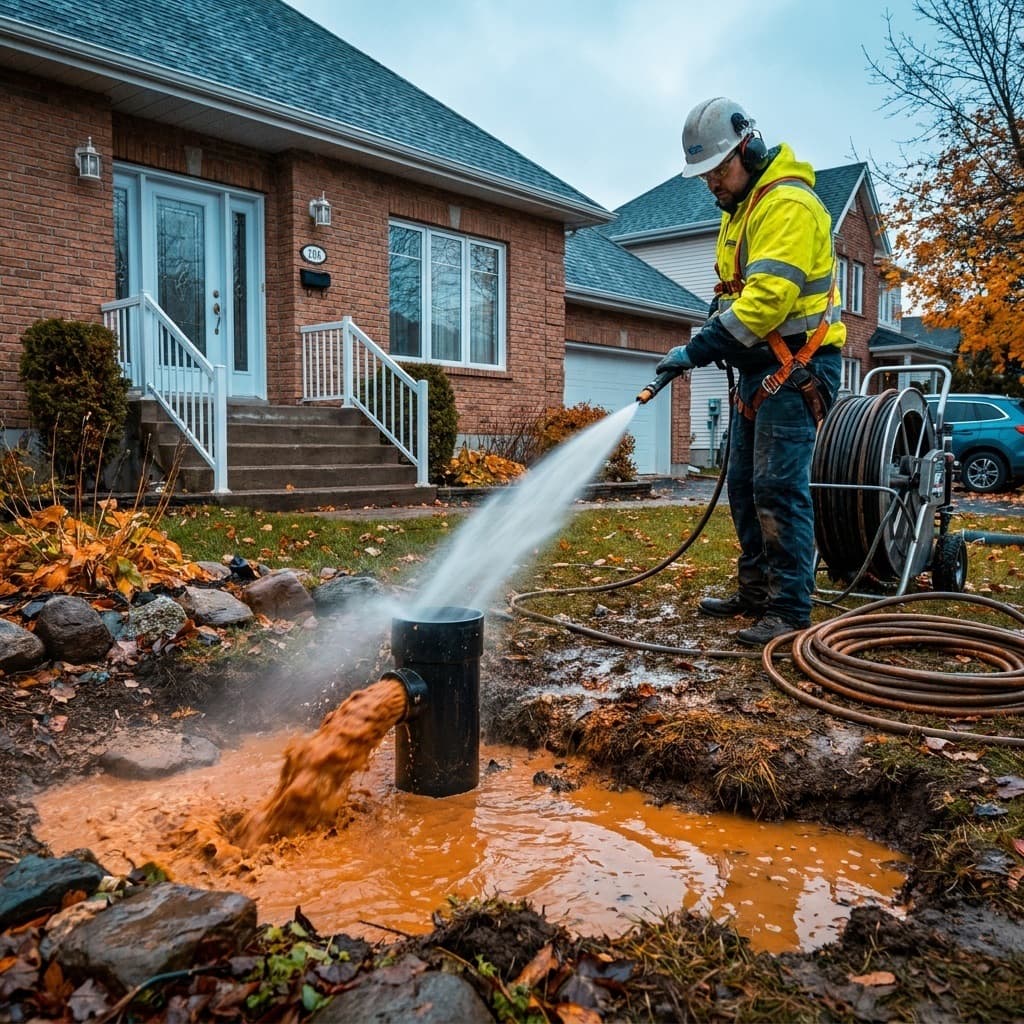
Level two, early treatment. When the camera inspection reveals a still-moderate ochre deposit — reddish sludge clinging to the walls but water still flowing — a high-pressure cleaning combined with targeted chemical sterilization clears the problem. The job usually takes a day. We use rotary high-pressure heads designed to peel off the bacterial biofilm, followed by a rinse and a sterilization pass. A second camera inspection at the end of the job confirms the drain is clear and provides a video reference for follow-up over the coming years.
Level three, compromised drain. When the inspection reveals the drain is severely clogged — sludge taking up more than half the section, perforations blocked, flow almost nil — cleaning alone is no longer enough. The solution is either replacing the exterior drain or, when exterior excavation is not feasible, installing an interior sump-and-drain system (interior cuvelage). Exterior replacement remains the reference because it addresses the cause: new drain, new geotextile, new gravel bed, new foundation waterproofing membrane. See our new French drain installation page for the technical detail of this type of project.
Level four, basement already taking water. When iron ochre has already caused recurring water infiltration and the drain cannot be salvaged, the solution combines several interventions: interior under-slab drain, properly sized sump pump, sealing membrane on the cold-room side, and water-table management where required. It is the heaviest option but the right answer when the outside is inaccessible — mature landscaping, attached outbuilding, budget constraints. A combination of partial exterior drain plus interior cuvelage is sometimes the most pragmatic strategy. The on-site diagnosis determines the right blend for your situation.
Is iron ochre dangerous to your health?
Iron ochre itself is not toxic to humans. The iron bacteria Gallionella and Leptothrix are not known pathogens, and oxidized iron is not dangerous on contact or by inhalation. If you have touched ochre sludge while inspecting your sump, washing your hands with soap and water is enough. There is no direct toxicology concern.
The indirect risk, however, is real and too often underestimated. When iron ochre clogs the drain enough to cause basement water infiltration, it is the prolonged dampness and standing water that create the problem. Mould grows quickly on organic materials — framing lumber, drywall, fibreglass insulation, baseboards, carpet. Certain mould species release spores and volatile organic compounds that irritate the airways, trigger episodes in asthmatics and can lastingly affect indoor air quality. Children, the elderly and immunocompromised people are particularly sensitive.
While waiting for intervention, two simple measures limit the risk. Ventilate the basement — open windows for a few minutes a day when the weather allows, and move the air with a fan. Dehumidify actively: a properly sized mechanical dehumidifier kept below 55 percent relative humidity meaningfully slows mould growth. Remove water-soaked materials right away (cardboard, insulation, carpet) that cannot be saved. And lock in the intervention date quickly: every month of delay deepens the secondary damage, which often ends up costing more than the drain work itself.
How much does iron ochre treatment cost?
The question always comes up, and the honest answer is that it depends on the level of intervention needed. Here are the ranges we regularly see in Lanaudière, as a guide only — the on-site diagnosis gives you the actual number for your home.
Drain camera inspection with video and written report: a few hundred dollars as a standalone visit. This is the essential diagnostic step. High-pressure drain cleaning with sterilization, for a generally healthy drain: typically a thousand to three thousand dollars, depending on length and access. Installing inspection ports at the four corners of the foundation for a home without them: an affordable intervention, usually done in a day, that makes all future inspections practical.
Interior sump-and-drain system (interior cuvelage) for a home where the exterior drain cannot be salvaged: a five-figure investment, variable with the length of wall treated, the diameter of the sump basin, pump capacity and finishing. Complete exterior drain replacement with excavation and re-doing the foundation waterproofing: also a five-figure investment, often higher than interior cuvelage because of the excavation, but it addresses the cause at the source and pairs very well with a full re-waterproofing of the foundation.
The real price depends on the length of drain to treat, the depth of the basement, site access — mature landscaping or an attached outbuilding complicates excavation — and the level of finishing you want after the work. We always provide a detailed written estimate after the on-site inspection, free of charge, with no obligation.
Our process at Imperméabilisation GSV
Our approach to iron ochre always follows the same four steps, regardless of severity. Step one, the drain camera inspection. Our team comes out, opens the inspection ports (or temporarily installs one when there is none), and runs the camera through the drain along its full length. The video is recorded and handed to you. This step objectively reveals the state of the drain, the extent of the ochre deposit, and confirms — or rules out — other potential issues such as a collapsed pipe or root intrusion.
Step two, the diagnosis and intervention plan. Based on the video, we walk you through the options that apply to your case in plain language, with the strengths and limits of each. You receive a detailed written estimate, no obligation. No work begins until you formally accept the plan. When several intervention levels are defensible, we explain why we recommend one over the other.
Step three, the work itself. Depending on the chosen plan, our crews carry out the high-pressure cleaning, install the inspection ports, replace the exterior drain or install an interior sump-and-drain system. The job is documented with before-and-after photos. A second camera inspection is always run at the end to confirm the drain is clear and to provide a video reference of the final condition.
Step four, the warranty and preventive maintenance plan. All our work is covered by a written warranty handed to the customer. For at-risk lots, we offer a periodic maintenance plan — camera inspection at regular intervals, preventive cleaning as needed — that meaningfully extends the system's service life. Our company is RBQ, APCHQ, RECQ, Réno-Maître and Delta-MS certified, all credentials verifiable online. Our RBQ licence is 5596-4496-01. Over 30 years of field experience in Lanaudière give us a fast, reliable read on iron-ochre cases — and the honesty to tell you when an interior cuvelage is defensible and when only an exterior replacement settles the problem for good.
Get a free estimate
Suspect iron ochre in your French drain in Joliette, Repentigny, Terrebonne, Mascouche, Lavaltrie or anywhere in Lanaudière? Imperméabilisation GSV comes out for a camera inspection, hands you the video and a written diagnosis, and walks you through the options that apply to your case. Over 30 years of experience, a local team based in Saint-Paul, RBQ licence 5596-4496-01, and current APCHQ, RECQ, Réno-Maître and Delta-MS certifications. Call 514.909.1422 or request a quote online — typically same-business-day response.
Why choose Imperméabilisation GSV?
- Over 30 years of experience
- Free, no-obligation estimate
- RBQ Licence: 5596-4496-01
- APCHQ, RECQ, Réno-Maître certified
- Warranty on all work
Frequently asked questions
Need a free quote?
Fast, professional service in Lanaudière, Laurentides, and Rive-Nord