
Basement water infiltration — diagnosis and solutions in Lanaudière
A dark stain at the base of the wall, a stubborn damp smell, a puddle that comes back with every heavy rain or spring thaw: basement water infiltration is not something a mop fixes. Behind every infiltration there is a concrete cause — a crack, a compromised drain, a missing membrane, hydrostatic pressure — and each cause calls for a different fix. Imperméabilisation GSV has been diagnosing and stopping basement infiltrations across Lanaudière for over 30 years.
Where is the water in my basement coming from?
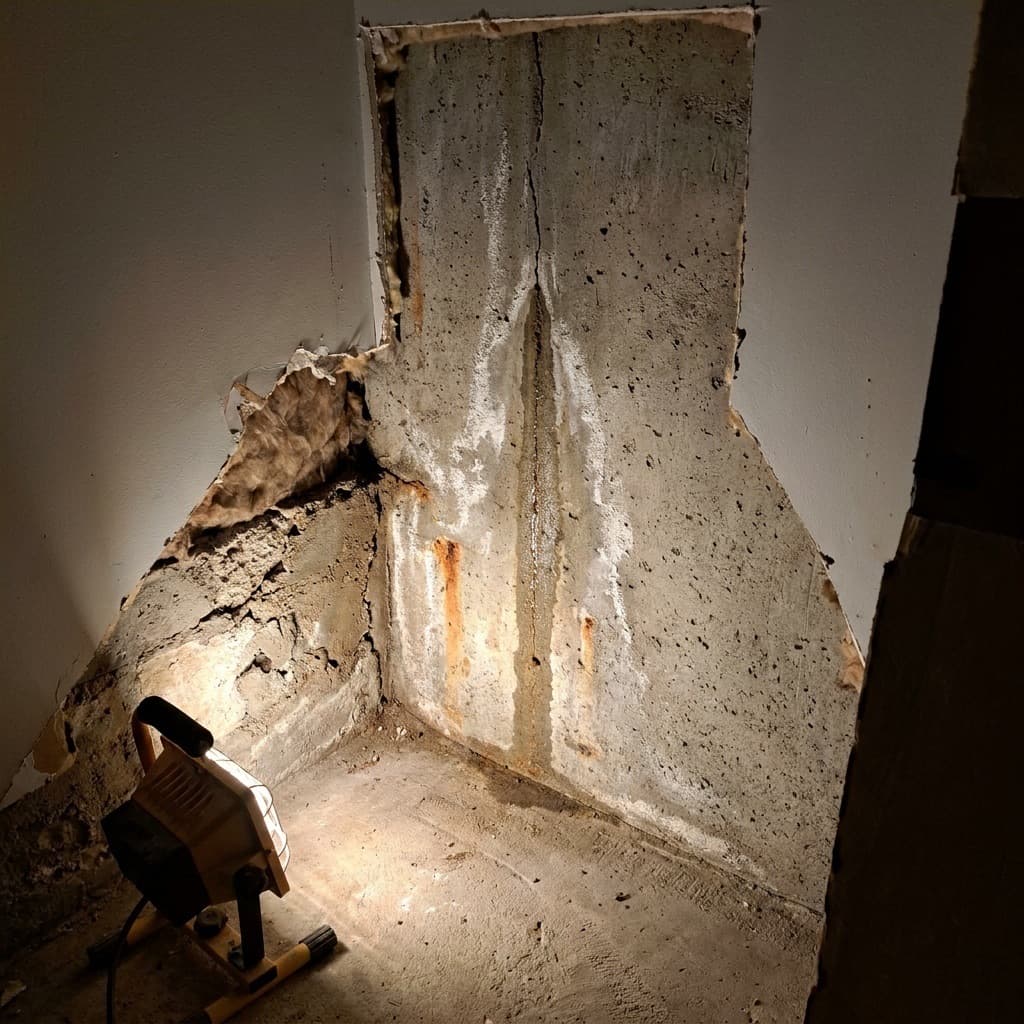
Five major causes account for almost every basement water infiltration we see in the field. The first, and most frequent, is a foundation crack. A shrinkage crack, a vertical crack from settling, a horizontal crack from frost-laden soil pressure: regardless of type, as soon as a crack cuts through the wall or slab, water eventually gets through. On poured-concrete foundations, thin vertical cracks are the most common; on concrete-block foundations, the joints are usually what fails first.
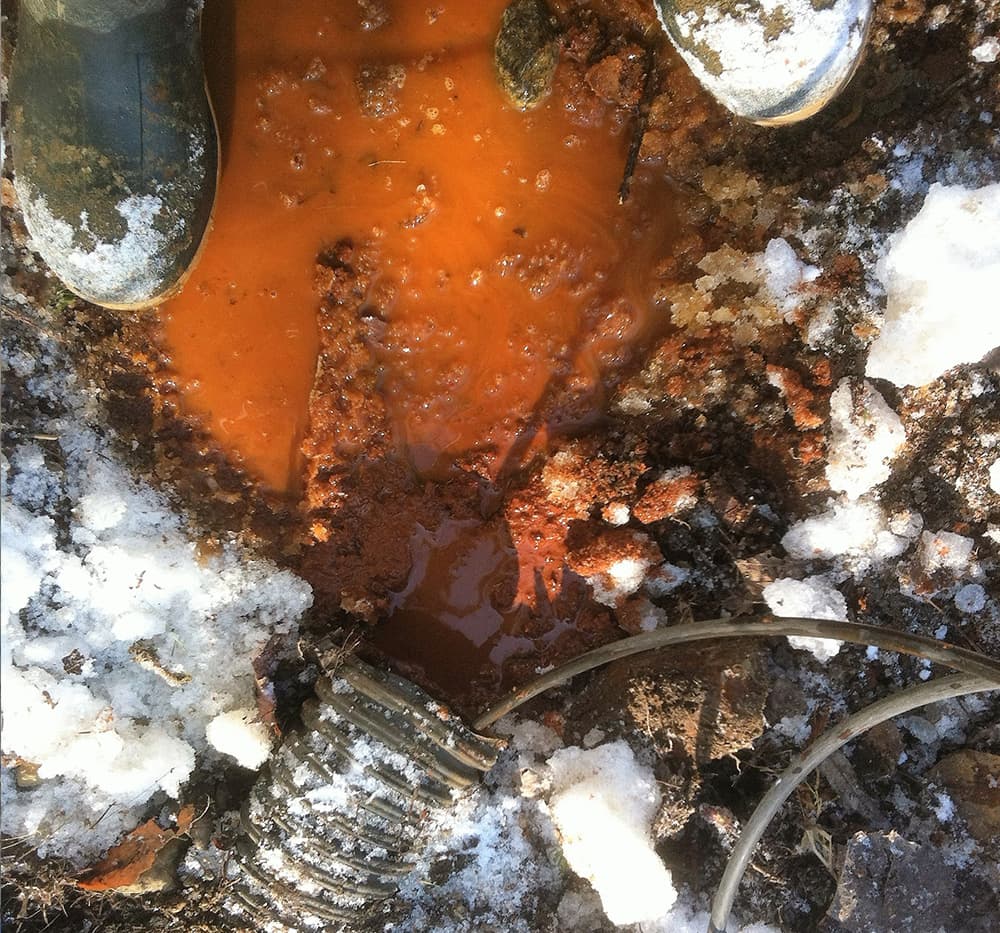
Second cause, a defective or missing French drain. The French drain, installed at the footing, captures groundwater before it can press against the foundation and routes it to a sump pit or a ditch. A drain plugged by iron ochre, crushed, badly sloped or simply absent (on older homes) lets water build up against the wall — and water always ends up finding the path of least resistance.
Third cause, missing or degraded waterproofing membrane. The tar-based membrane applied at construction degrades in 20 to 30 years. On homes built before 1990 it is often non-existent, or so fragmented it no longer plays its role. Groundwater then seeps directly through the pores of the concrete, especially during freeze-thaw cycles that micro-fracture the surface.
Fourth cause, the slab-to-wall joint, where the basement slab meets the foundation wall. On older homes this joint is not sealed and becomes a preferred path for water rising by capillarity, or water pushing under the slab when the drain can no longer keep up.
Fifth cause, poor surface drainage: ground sloped toward the house instead of away, downspouts dumping at the base of the wall, a concrete pad holding water against the foundation, basement windows without a draining window well. Rain and meltwater are funnelled toward the foundation instead of away. It is the easiest cause to correct and too often overlooked.
How do I diagnose where it's coming from?
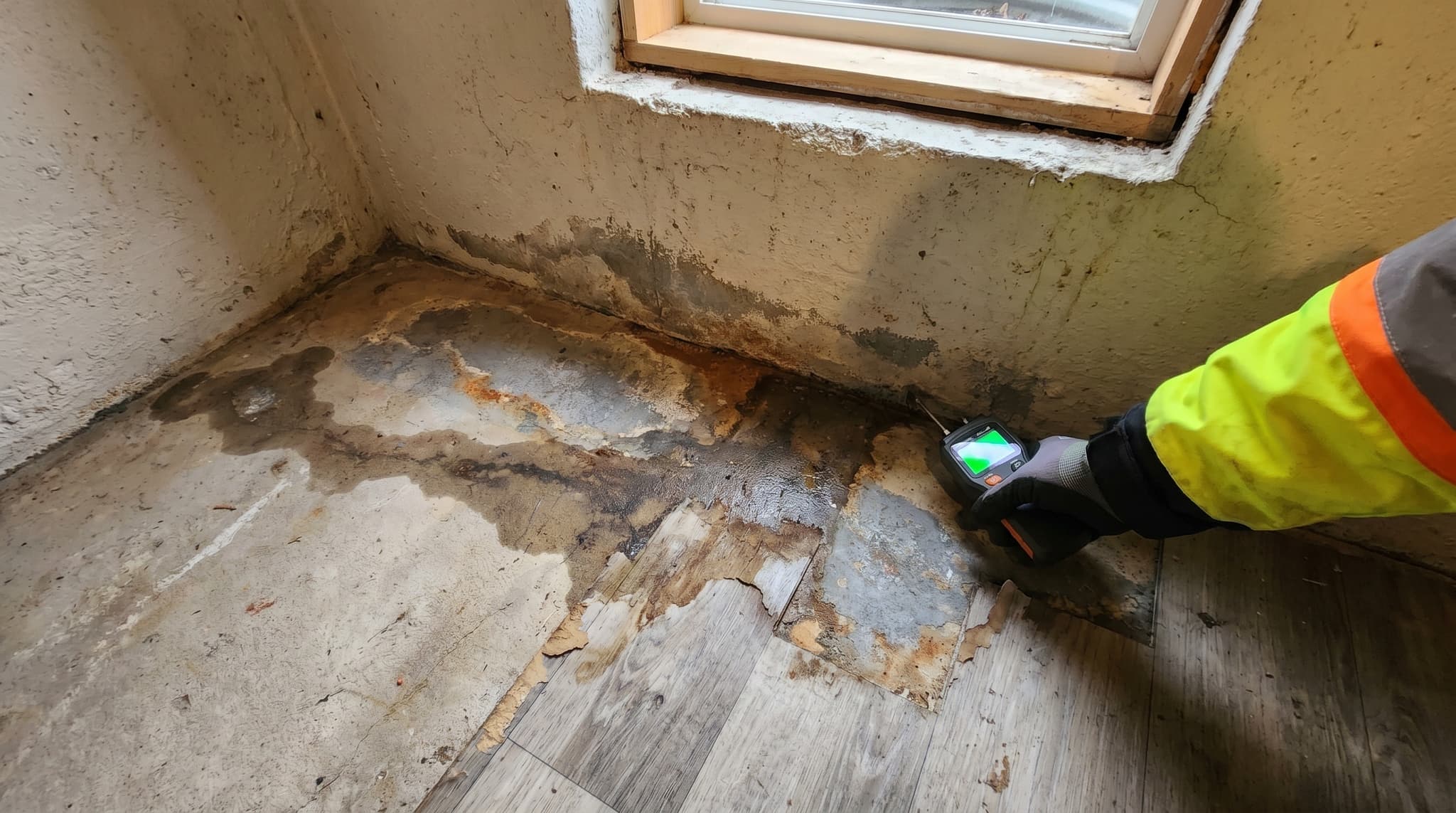
Before you call, a few questions already point the diagnosis in the right direction. Where exactly is the water showing up? Along a wall (often a crack), at a corner of the basement (often the drain), in the middle of the slab (often capillary rise or an under-slab drain), or under a window (often the window well). When does the water show up? During heavy rain (surface drainage), in spring during snowmelt (high water table, overwhelmed drain), continuously regardless of weather (blocked drain or underground source).
A professional inspection confirms the origin within a few hours. We work in three steps: observe visible clues inside (stains, white salt efflorescence, bubbling paint, mould), inspect the exterior (slope, gutters, visible cracks, condition of window wells), then, if needed, run a camera inspection of the French drain to confirm or rule out a compromised drain. That combination produces a reliable diagnosis, and the diagnosis is what determines the right intervention — not the other way around.
Solutions by cause
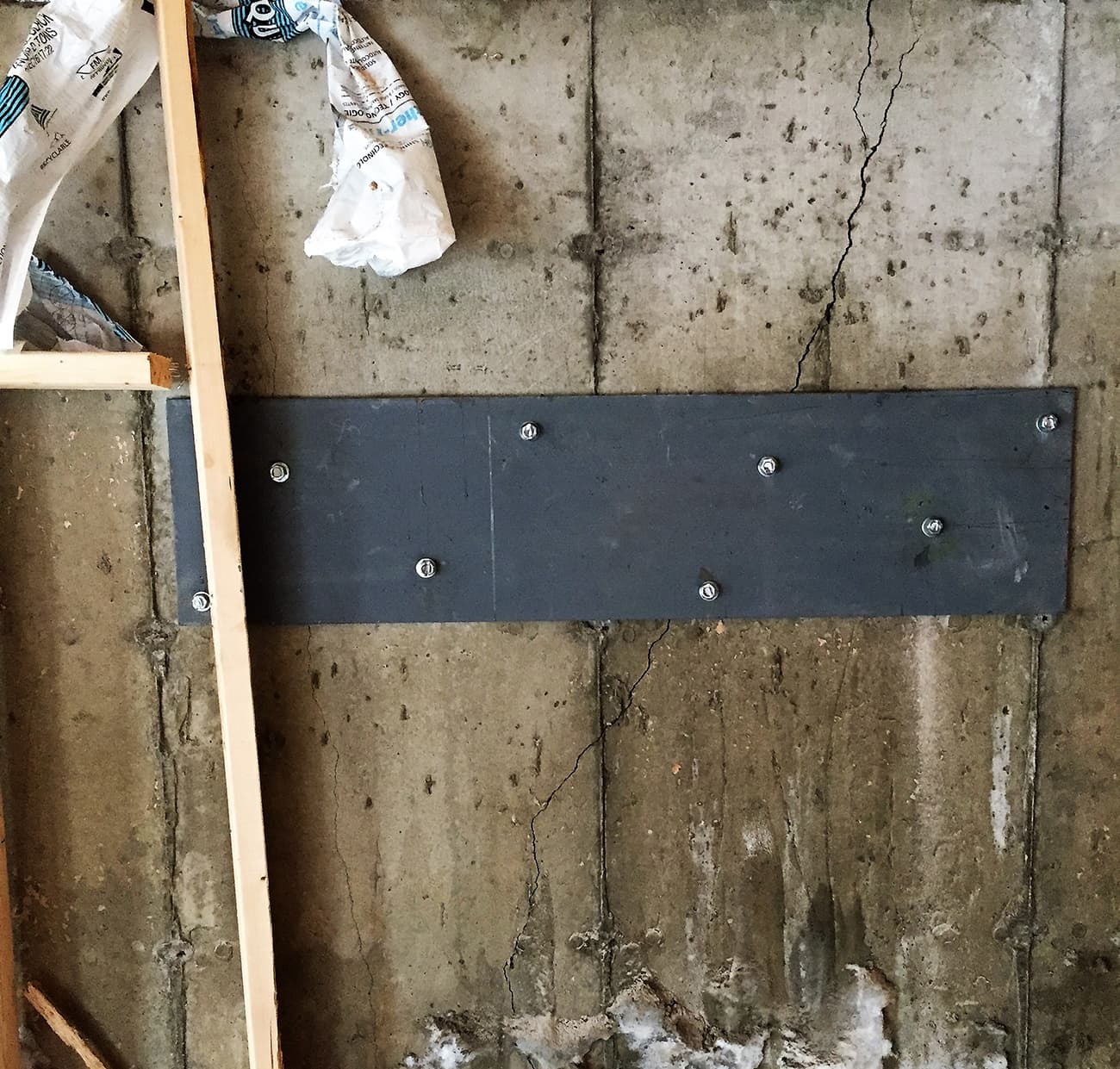
For a foundation crack, the standard solution is polyurethane injection from the inside. Polyurethane is pressure-injected through the full thickness of the wall, expands on contact with moisture and seals the crack permanently. The job takes half a day per crack, requires no excavation, and is warrantied. For structural cracks (wider than 3 mm, visible displacement), injection is paired with carbon fibre reinforcement or steel stitching. See our foundation crack repair page for the technical detail.
For a compromised French drain, two options exist depending on severity. If the drain is still in generally good shape but obstructed by sediment or iron ochre, a high-pressure cleaning restores flow. If the drain is crushed, badly sloped or too degraded to be salvaged, it needs to be replaced by exterior excavation. See our French drain installation page for project detail. When exterior excavation is not feasible (mature landscaping, no access), an interior under-slab drainage system paired with a properly sized sump pump becomes the answer.
For a missing or degraded waterproofing membrane, the solution is a full re-do of the exterior foundation waterproofing: excavation, cleaning the wall down to sound concrete, applying a new elastomeric membrane or installing a Delta-MS dimpled membrane, and backfilling with draining material. It is the most complete intervention, and the one with the longest warranty because it tackles the cause at the source.
For a weeping slab-to-wall joint, the solution is usually an interior perimeter drain: trench along the perimeter, perforated drain installed under a new slab, sump pump, and slab restoration. It is a heavy intervention, but often the only durable answer when the exterior cannot be treated.
For a surface-drainage problem, corrections are simpler and less expensive: extending downspouts at least 1.5 metres from the wall, regrading the soil so it slopes away from the foundation for the first few metres, installing or replacing window wells with a draining base, and removing concrete pads that hold water near the wall. These corrections often form part of a bigger plan combined with heavier work on the drain or waterproofing.
What do I do in an emergency if my basement is taking water?
When water is actively coming in, the first few hours matter. Cut power to the basement at the panel first, especially if water is close to an outlet, panel or plugged-in appliance. Move valuables, papers, electronics and organic materials (cardboard, carpet) to a dry area. If you have a sump pump, check it is running — a tripped breaker or a stuck float is a frequent flood cause. If the water is more than a few centimetres deep, a portable submersible pump or a wet-dry vacuum buys time before the contractor arrives.
Once the water is out, ventilate and dehumidify right away. Open windows if the weather allows, run fans to move the air, and set up a mechanical dehumidifier. The goal is to get below 55 percent relative humidity as fast as possible to limit mould, which appears in 24 to 48 hours on water-soaked materials. Remove without delay anything that will not dry out: cardboard, fibreglass insulation, drywall soaked above 30 cm, carpet and underlay. Keep photos and documentation for the insurance claim.
Then call a contractor who specializes in waterproofing. The point is not just to pump out the water, it is to identify where it is coming from so it does not come back. The sooner the inspection happens, the sharper the diagnosis — fresh traces tell the story better than dried marks weeks later. Imperméabilisation GSV usually responds same business day to infiltration emergencies in Lanaudière.
Does my insurance cover infiltration?
The short answer: it depends on your policy, and it is worth reading the next one before you sign. Most Quebec home-insurance policies cover sudden and accidental water damage — a sewer backup, a burst pipe, a water-heater leak — often through an endorsement and a specific deductible. Progressive infiltration through the foundation, the drain or the walls is, however, usually excluded from base coverage, because it is treated as a maintenance issue or a building defect rather than a sudden loss.
Several insurers now offer an infiltration or groundwater endorsement that covers exactly this type of damage, with its own limit and deductible. Check with your broker or directly in your policy under water damage, sewer backup and exclusions. Document everything: before-and-after photos, video if possible, contractor invoices, inspection report. If you submit a claim, the insurer will send an adjuster on site — your file moves faster when everything is already well documented.
The above is general information. For the detail of your coverage, refer to your own policy and broker.
How much does it cost to stop an infiltration?
The cost depends directly on the cause identified at the diagnosis stage. Here are the ranges we regularly see in Lanaudière, as a guide only — every house is different and only an on-site diagnosis gives you the actual number.
Polyurethane injection of a foundation crack from the inside: typically a few hundred to about a thousand dollars per crack, depending on length and access. Drain camera inspection with video and written report: a few hundred dollars. High-pressure drain cleaning: typically a thousand to three thousand dollars depending on length. Full exterior waterproofing replacement by excavation: a five-figure investment, variable with basement depth, length of wall treated and site access. Interior perimeter drain with sump pump: also a five-figure investment.
The real price depends on the length of work, the depth of the foundation, site access (mature landscaping or an attached outbuilding complicates excavation), and the level of finishing you want. We always provide a detailed written estimate after the on-site inspection, free of charge, with no obligation.
Why Imperméabilisation GSV
Over 30 years of field experience in Lanaudière give our team a fast, reliable read on infiltration cases. Every week we see the same patterns come back — the typical crack on 1980s homes, drains compromised by iron ochre in clay sectors, slab-to-wall joints on block-foundation homes — and we know which intervention actually solves the problem long-term, rather than masking symptoms for a spring or two.
Our company is based in Saint-Paul, certified RBQ (licence 5596-4496-01), APCHQ, RECQ, Réno-Maître and Delta-MS — all credentials verifiable online. Every intervention is documented, covered by a written warranty, and preceded by a clear diagnosis with a free estimate. We always explain the options that apply to your case in plain language, and we tell you honestly when a light intervention is enough rather than systematically pushing toward the heaviest job.
Service areas
Imperméabilisation GSV stops basement water infiltration throughout Lanaudière, the Laurentides and the North Shore of Montreal. We regularly travel to Joliette, Saint-Charles-Borromée, Notre-Dame-des-Prairies, Repentigny, Mascouche, Terrebonne, Lavaltrie, L'Assomption, Saint-Paul and surrounding municipalities. For infiltration emergencies, we prioritize same-business-day visits when our schedule allows.
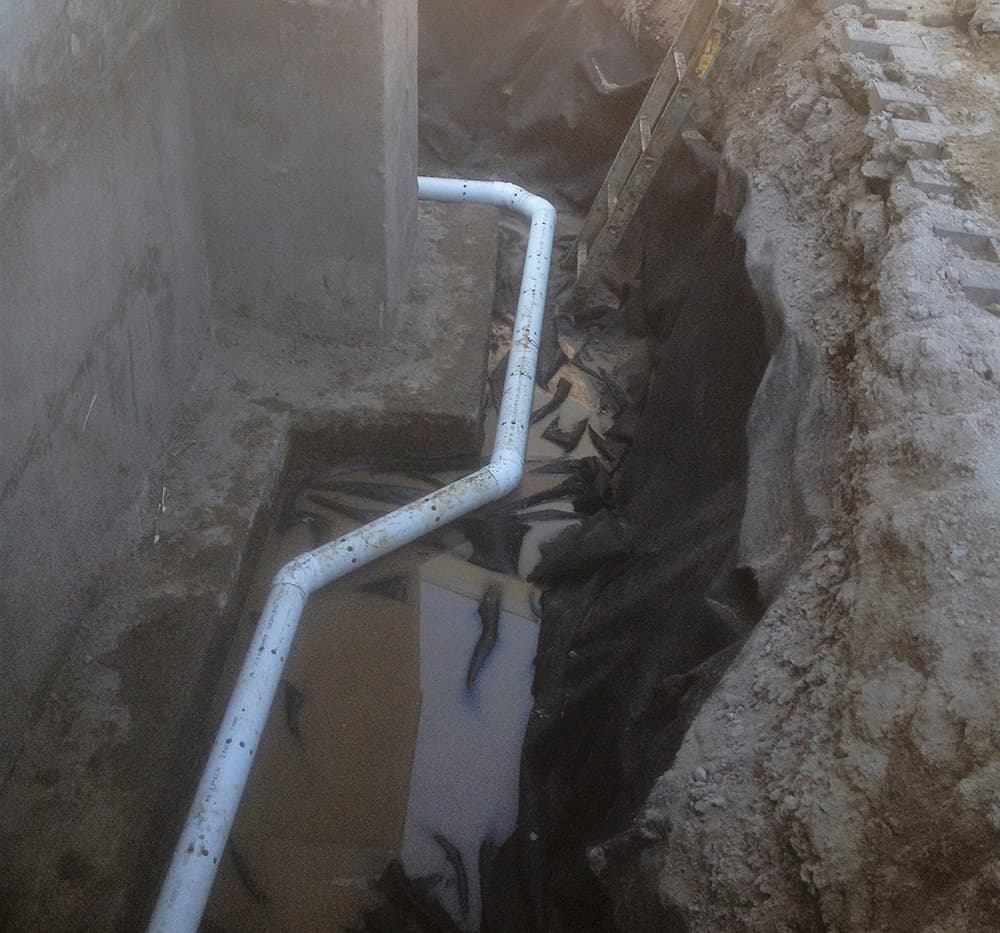
Water infiltration in your basement? Call us
Is your basement taking water in Joliette, Repentigny, Terrebonne, Mascouche, Lavaltrie or anywhere else in Lanaudière? Imperméabilisation GSV comes out for an on-site diagnosis, identifies the exact origin of the infiltration and provides a free written estimate of the applicable solutions. Over 30 years of experience, a local team based in Saint-Paul, RBQ licence 5596-4496-01, and current APCHQ, RECQ, Réno-Maître and Delta-MS certifications. Call 514.909.1422 — typically same-business-day response.
Why choose Imperméabilisation GSV?
- Over 30 years of experience
- Free, no-obligation estimate
- RBQ Licence: 5596-4496-01
- APCHQ, RECQ, Réno-Maître certified
- Warranty on all work
Frequently asked questions
Need a free quote?
Fast, professional service in Lanaudière, Laurentides, and Rive-Nord